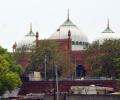
The objections against the suit were raised by the management committee of the mosque and the Uttar Pradesh Sunni Central Waqf Board.

The ASI has moved an application to that effect before the special Lucknow bench of Allahabad high court.
"The matter is to be settled now by the Supreme Court. We cannot accept the sharing formula, which has been ordered/suggested by the Lucknow bench of the Allahabad high court," says Zafaryab Jilani, chief counsel for the Sunni Central Waqf Board, in an interview.
In what could be a turning point in the Ayodhya dispute, the Archaeological Survey of India has reported to the high court that its excavations found distinctive features of a 10th century temple beneath the Babri Mosque site.
A three-judge bench of the Allahabad high court, which is hearing a title suit on Ayodhya land, had directed the UP government to replace Mani following complaints by the Sunni Central Waqf Board of violation of excavation norms.

With this, the number of suits filed in the Krishna Janmabhoomi-Shahi Idgah case, in different courts of Mathura, has gone up to 15.

The plea, filed by advocates Shishir Chaturvedi and Karunesh Kumar Shukla, said that apart from private individuals and members of state Sunni Board, the presence of central and state government representatives was essential to ensure proper management of the funds.

While Ayodhya resembled a city under seige earlier during the day, the scene was no different elsewhere in the state with police and central forces keeping an eye over the security situation and Chief Minister Yogi Adityanath personally monitoring it from a hi-tech control room in the state capital.
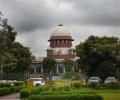
The Supreme Court of India will likely hear a batch of petitions challenging the constitutional validity of the Waqf (Amendment) Act, 2025 on April 15. The Act, which came into force on April 8, has been met with widespread criticism from various stakeholders, including politicians, the All India Muslim Personal Law Board (AIMPLB), and Jamiat Ulama-i-Hind. They argue that the law is discriminatory and violates the fundamental rights guaranteed under Articles 25 and 26 of the Constitution. The petitions allege that the amendments give the government more control over the administration of Waqf, effectively sidelining the Muslim minority from managing their own religious endowments.
The state government has allotted the five-acre plot in Ayodhya's Dhannipur for the construction of the mosque on the directive of the apex court.

A three-judge Supreme Court bench will hear petitions challenging the constitutional validity of the Waqf (Amendment) Act, 2025, on April 16. The petitions, including those by politicians and the All India Muslim Personal Law Board (AIMPLB) and Jamiat Ulama-i-Hind, were filed in the top court challenging the validity of the newly-enacted law. The Centre has filed a caveat in the apex court, seeking a hearing before any order is passed.

The temple is said to be situated in close vicinity of Teele Wali Masjid at Laxman Teela.

The hearing of the civil suit filed in a Mathura court seeking ownership of the entire 13.37 acres of Krishna Janmabhoomi land has been adjourned till December 10, after the plaintiff in the case, Shri Krishna Janmabhoomi Trust, failed to appear before the court on Wednesday.

Justice Padia stayed the Varanasi civil court order, ruling that the subordinate court passed its order ignoring the fact that the high court had reserved its verdict on the plea challenging the maintainability of the suit which had been filed earlier in the lower court for the survey.
The petitioner submitted an application in the court of the Civil Judge on Monday seeking permission for 'purification' of the sanctum sanctorum of the Keshav Dev temple, which he claimed was inside the mosque, his counsel said.

The verdict by a special court in the Babri Masjid demolition case comes 28 years after kar sevaks razed the 16th century mosque and almost a year after the Supreme Court settled the land case in favour of a Ram temple at the disputed Ayodhya site.

The apex court rejected an appeal challenging a July 10 decision of the Allahabad high court which had also dismissed the plea finding no error or illegality in the order of a Mathura civil judge who had decided to first hear the issue of maintainability of the suit as raised by management committee of the mosque.
The Hindu litigants claim the mosque holds signs suggesting that it was a temple once.
The Supreme Court of India will hear a plea from the mosque management committee challenging an order rejecting its petition in the Krishna Janmabhoomi-Shahi Idgah dispute in Mathura, Uttar Pradesh on January 15. The Allahabad High Court had rejected the mosque committee's plea, stating that the religious character of the Shahi Idgah mosque needed to be determined. The case involves claims that the mosque was built after the demolition of a temple, a claim disputed by the mosque committee. The Supreme Court will now decide on the maintainability of the mosque committee's plea.
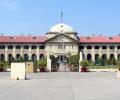
The Supreme Court on Monday directed authorities to remove a mosque from the premises of the Allahabad high court within three months, telling the petitioners that opposing the demolition that the structure stood on a terminated lease property and they can't claim it as a matter of right to continue.
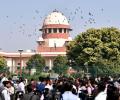
highlights of the Supreme Court judgment in which it unanimously granted the entire 2.77 acre of the disputed Ram Janambhoomi-Babri masjid land in Ayodhya to deity Ram Lalla.

Sources in the prominent Muslim body Jamiat Ulama-i-Hind said it was not in favour of filing a review petition and wants the matter to end.
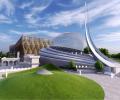
The mosque is coming up in the Uttar Pradesh district pursuant to the Supreme Court verdict in the Ram Janmabhoomi case.
18 review pleas were filed against the November 9 verdict of the apex court. The SC found 'no ground to entertain' any of them.
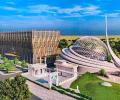
"The design of the mosque has been prepared using modern technology, and it will be egg-shaped without any dome. The two-storeyed mosque will not have any minaret. Solar power will be installed in the mosque, and around 2,000 people will be able to offer 'namaaz' at the same time," he said.

Here is a timeline of the second-lengthiest case in the apex court history:
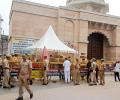
The Allahabad high court reserved its judgment on Friday in a petition challenging the maintainability of a suit seeking 'restoration' of a temple at the site of the Gyanvapi mosque in Varanasi.
The bench then said that it was not going to fast track the matter.

'How can someone who has never been associated with the movement and never had darshan of Ram Lalla mediate on the matter of temple construction? We have gone to jail for it, faced house arrest and have been fighting court cases. Sri Sri does not qualify to mediate on the matter.'
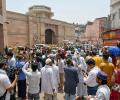
The Supreme Court on Friday agreed to hear an appeal of the Gyanvapi management committee against an Allahabad High Court order which held that lawsuits for "restoration" of a temple where the mosque stands in Varanasi are maintainable.
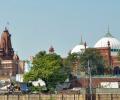
The Akhil Bharatiya Tirath Purohit Mahasabha and the Mathur Chaturved Parishad pleaded to be made respondents in the case. They said the suit for the removal of the mosque should not be allowed as it is detrimental to communal harmony in the country, according to their counsels.
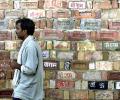
The fresh initiative for settlement of the Ayodhya dispute, led by a former High Court judge, has been signed by more than 10,000 Hindu and Muslims.

The petitions filed by the Anjuman Intezamia Masjid Committee (AIMC) and the Uttar Pradesh Sunni Central Waqf Board had also challenged a Varanasi court order of April 8, 2021 to conduct a comprehensive survey of the Gyanvapi mosque.
But three years after the apex court settled the Ram Janmabhoomi-Babri Masjid land dispute, there are no signs of any building activity on the proposed mosque site.

Born in Ayodhya, Ansari was the first to file the suit on the matter in the court of civil judge of Faizabad in 1949.

The Supreme Court on Monday directed the Chief Justice of the Allahabad high court to nominate two additional district judges within ten days as observers to deal with the upkeep and maintenance of the disputed Ram Janmbhoomi-Babri Masjid site in Ayodhya.

'The locals want a permanent solution to the perennial Mandir-Masjid issue. They have realised political parties will lose relevance if a temple is built.'
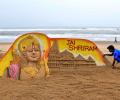
The following is the chronology of events related to the Ram Janmabhoomi-Babri Masjid land dispute in which, after the Supreme Court verdict, Prime Minister Narendra Modi on Wednesday conducted the 'Bhoomi Pujan' or ground breaking ceremony and laid the foundation stone for the temple's construction.
